
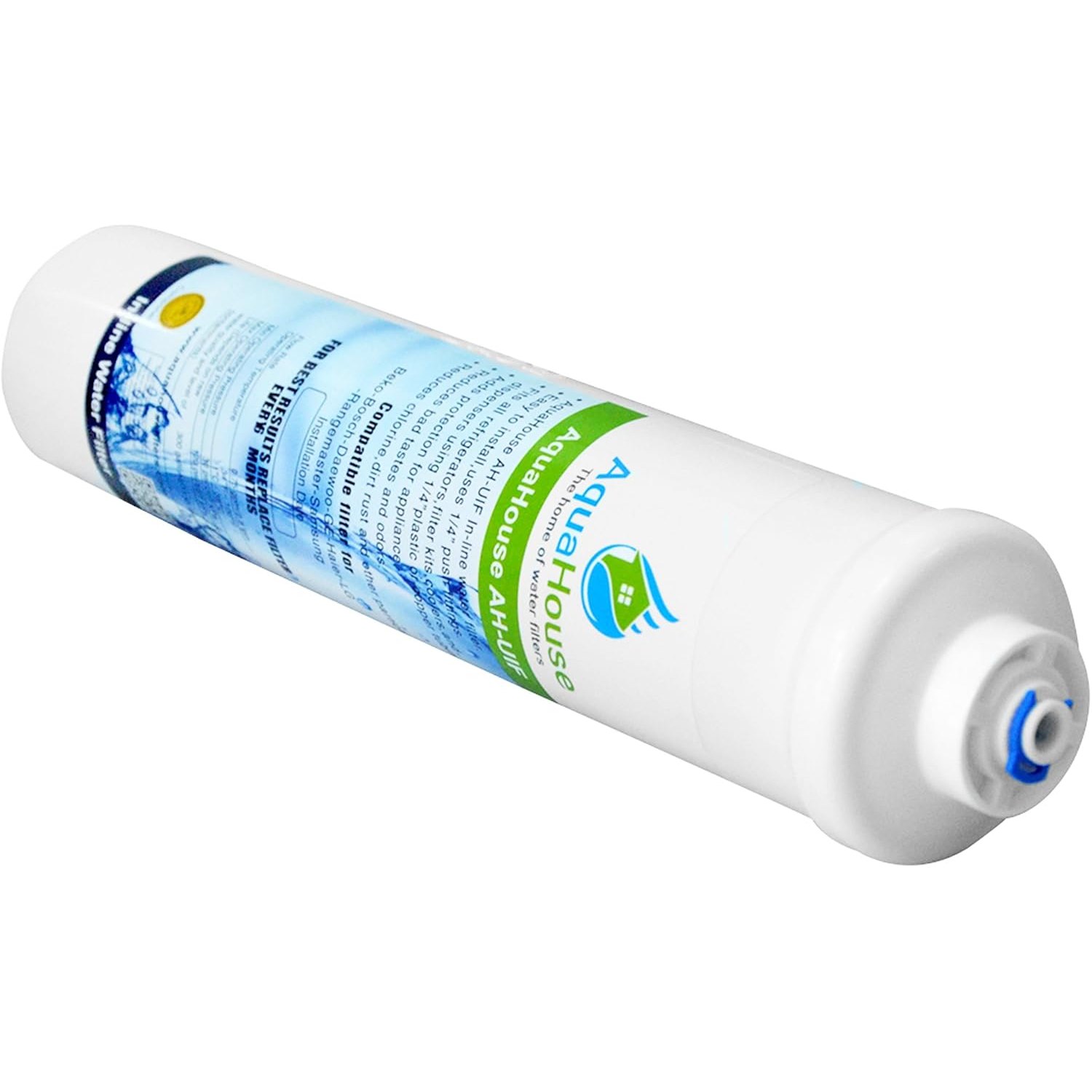
The complete guide
How To Choose An Inline Fridge Water Filter
The glass of water that tastes like the tap
Fridge dispensers promise cold, fresh water on demand. What a lot of households actually get is cold water that still tastes faintly of the tap, with that sharp chlorine edge you notice most when the water is cold. Ice cubes carry it too, which is how a glass of squash can end up tasting slightly off even though nothing is wrong with it.
Almost always, the cause is a filter that has been quietly doing nothing for a year or two. Filters are consumables. They work hard for a few months and then gradually stop making much difference, and because the change happens so slowly nobody notices until the water tastes like it did before the fridge was plumbed in.
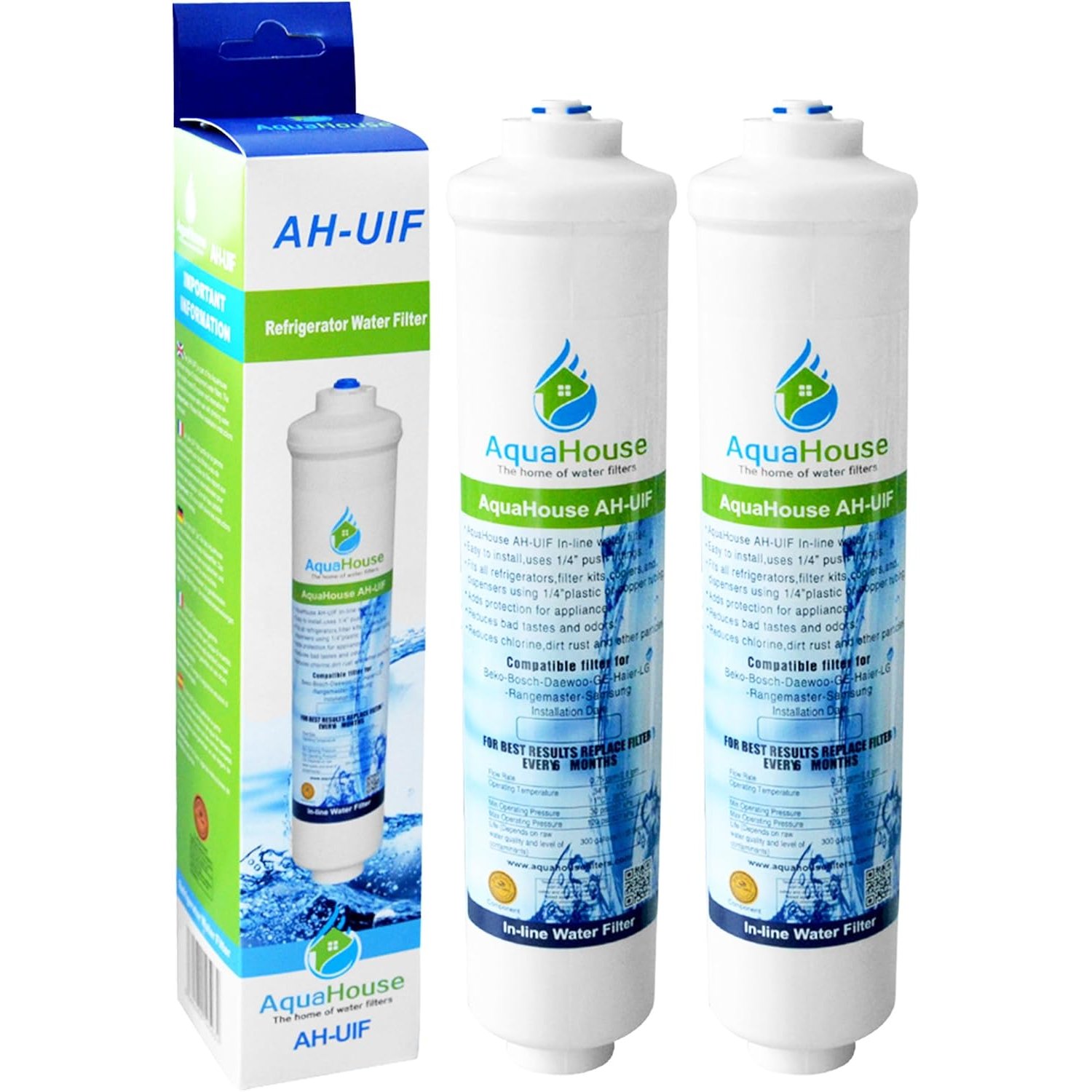
That is the job an inline fridge water filter does. It sits on the pipe feeding the appliance, the water passes through it on the way to the door, and it is designed to reduce chlorine taste and odour and sediment. Swapping a tired cartridge for a fresh one is one of those small jobs with a result you can taste the same evening.
Internal versus external, and why it matters
This is the single thing to get right before you buy anything. Fridge filters come in two broad types and they are not interchangeable.
An internal filter lives inside the appliance. It might twist into a housing in the ceiling of the fridge compartment, or hide behind a grille at the bottom of the door. You open the fridge to change it.
An external filter sits outside, on the water pipe that runs from a tap under the sink to the back of the fridge. It is a cylinder clipped into that pipe, and you change it by pulling the fridge forward. This product is the second kind. It is an external fridge filter and it will not replace an internal cartridge.
Checking takes about a minute. Ease the fridge away from the wall far enough to see the thin plastic pipe going into the back of it. If there is a cartridge in the middle of that run, you have an external setup. If the pipe goes straight in with nothing interrupting it, your filter is internal and you need a different part.
Pipe size and connectors
The second check is the tubing. Most fridge water lines use 6.35 mm outside diameter pipe, usually described as quarter inch. That is what this cartridge is built for.
The connectors matter as much as the size. Older external filters sometimes use screw fittings, or need separate push-fit couplers bought alongside the cartridge. This one has the push-fit quick connectors moulded into the cartridge itself, so there is nothing extra to order. You pull the old filter and its connectors off the pipe entirely, then push the bare tubing into each end of the new one.
If your existing filter uses different connectors to this one, that is normal and expected. The instruction to remember is that you remove the old fittings completely rather than trying to reuse them. The new cartridge brings its own.
What the filter is designed to do
Being straight about this is more useful than a long list. This cartridge is designed to reduce chlorine taste and odour and sediment in drinkable mains water.
Chlorine is the big one for taste. Water companies use it to keep the supply safe through the pipe network, which is a good thing, but it leaves a taste and a smell that a lot of people dislike. Reducing it is usually the difference between water that tastes of something and water that tastes of nothing, which is what most of us actually want.
Sediment is fine grit picked up along the way, more common in older housing stock with ageing pipework. Catching it keeps the dispenser and ice maker running cleanly as well as improving the drink.
What the filter is not is a treatment system. It is for water that is already drinkable from the mains. It is not a water softener, it will not change how hard your water is, and it is not suitable for private supplies like wells or rainwater tanks.
Who this suits
Households with a larger fridge freezer, particularly American-style models with a door dispenser and ice maker, are the main audience. Those appliances are the ones most commonly plumbed in with an external cartridge on the line.
It also suits anyone who has inherited a fridge with the house and has no idea when the filter was last changed. If you have lived somewhere two years and never touched it, the cartridge is almost certainly past it.
It does not suit people with an internal filter, people on a non-mains supply, or anyone whose fridge is not plumbed in at all. A jug filter is the simpler answer for that last group.
Fitting it without drama
You do not need a plumber. You need ten minutes, a towel, a small bowl and the ability to push a pipe firmly into a hole.
Find the isolating valve on the pipe feeding the fridge, usually under the sink or behind a kickboard, and close it. If there is no valve, use the mains stopcock. Open the fridge dispenser briefly to release pressure in the line.
Pull the fridge forward far enough to work behind it. Release the old cartridge and strip off any connectors left on the tubing. Make sure the pipe ends are cut square and clean, since a ragged cut is the usual cause of a drip later.
Push the tubing into each end of the new cartridge, watching the flow arrow so the water travels towards the fridge. Push properly. Push-fit joints need a positive shove to seat, and a half-hearted one is how leaks happen.
Turn the water back on, check the joints, then flush the cartridge through as the instructions describe. The first water out may look cloudy or carry fine dark specks of carbon dust. That is normal for a new filter and clears quickly. Discard it rather than drinking it.
Push the fridge back, leaving a little slack in the pipe so nothing is pulled tight, and check the joints again the next day once pressure has settled.
Living with it
The only ongoing task is replacement. Change the cartridge on the maker's schedule rather than waiting for a signal, because by the time the taste comes back the filter has been underperforming for a while.
The cheapest trick anyone has come up with is a marker pen. Write the fitting date on the cartridge body the day you install it. Next time you pull the fridge out, you know exactly where you stand without hunting for a receipt.
Keep the spare cartridge in its sealed packaging somewhere cool and dry until it is needed. If the fridge is going to be unused for several weeks, close the isolating valve, and run a few litres through when you start up again.
Choosing between options
If you are comparing external cartridges, the things worth weighing are pipe size, connector type, physical length and what the filter is specified to reduce. Everything else is noise.
Pipe size has to match, 6.35 mm here. Connectors built into the cartridge save you buying couplers separately. Length matters only if your fridge sits very tight to the wall, and 25.4 cm is a standard size that fits most gaps. And the specification tells you what to expect, which in this case is reduced chlorine taste and odour and sediment.
Buying in a two-pack is mostly about convenience and cost per cartridge. The second one means the next change does not require a shopping trip, and that alone makes it more likely to actually happen on time.
The short version
This is an external inline cartridge that fits on the 6.35 mm water pipe behind your fridge. Push-fit connectors are built in, so nothing extra is needed. It is designed to reduce chlorine taste and odour and sediment from drinkable mains water, and it does not replace a filter that sits inside the appliance.
Check behind your fridge first. If there is a cartridge on the pipe and the tubing is quarter inch, this is a straight swap, and you get a spare for next time.