

The complete guide
Choosing A Stainless Steel Gravity Water Filter For Your Kitchen
The problem with tap water that nobody really solves
Most people have the same low-level complaint about their drinking water. It is fine, technically, but it tastes of the pipes. There is a faint swimming-pool note after the water company has been flushing the mains, or a chalky mouthfeel that ruins a cup of tea. So you buy a filter jug, use it religiously for three weeks, then find it sitting empty at the back of the fridge while everyone drinks straight from the tap again.
The jug is not a bad idea. It is just too small and too fiddly for a household. You filter half a litre at a time, someone drinks it, nobody refills it, and the whole thing stalls. A gravity water filter fixes that by scaling the idea up. You fill a chamber once, you get litres of filtered water instead of a jug's worth, and the tap on the front means anyone can pour a glass without thinking about it.
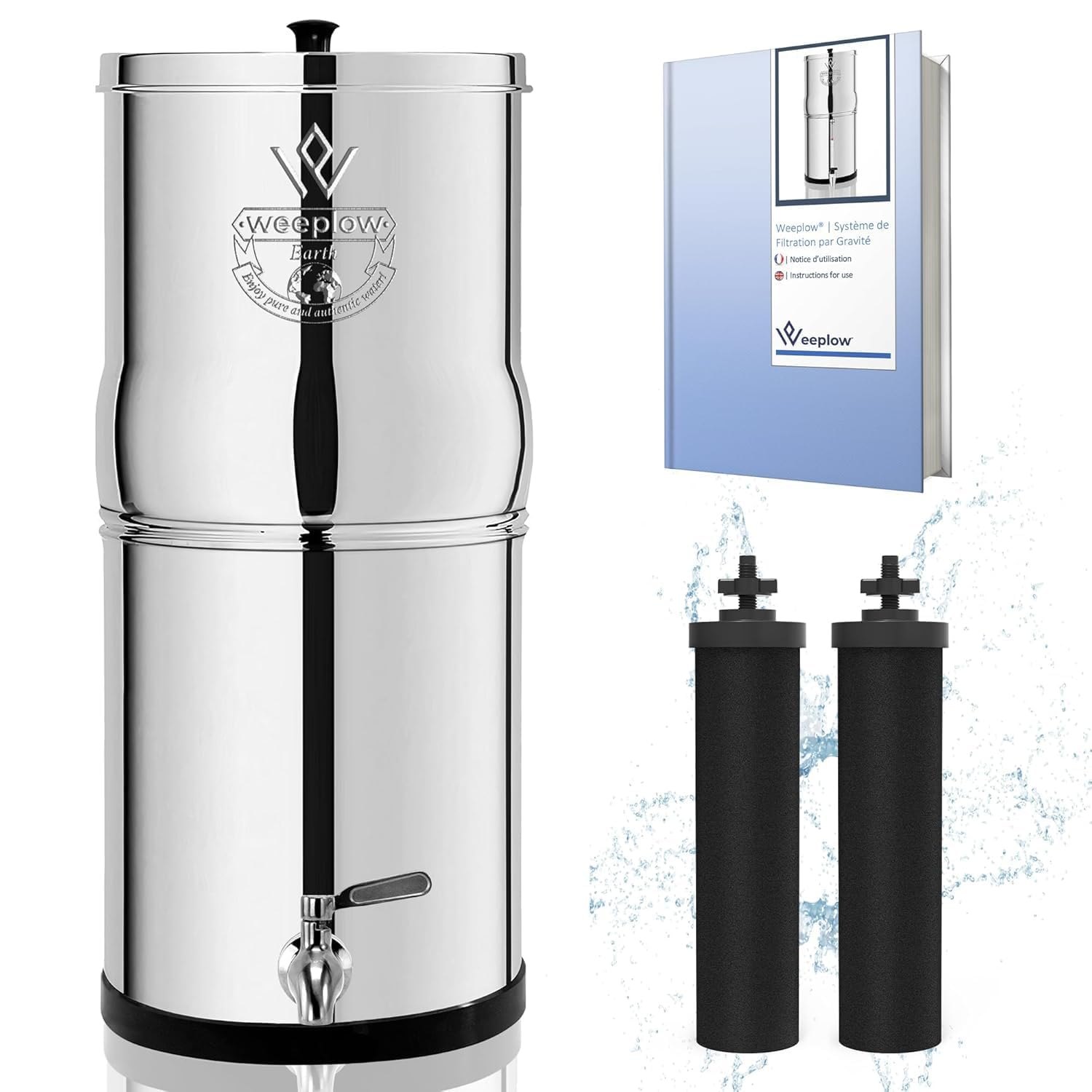
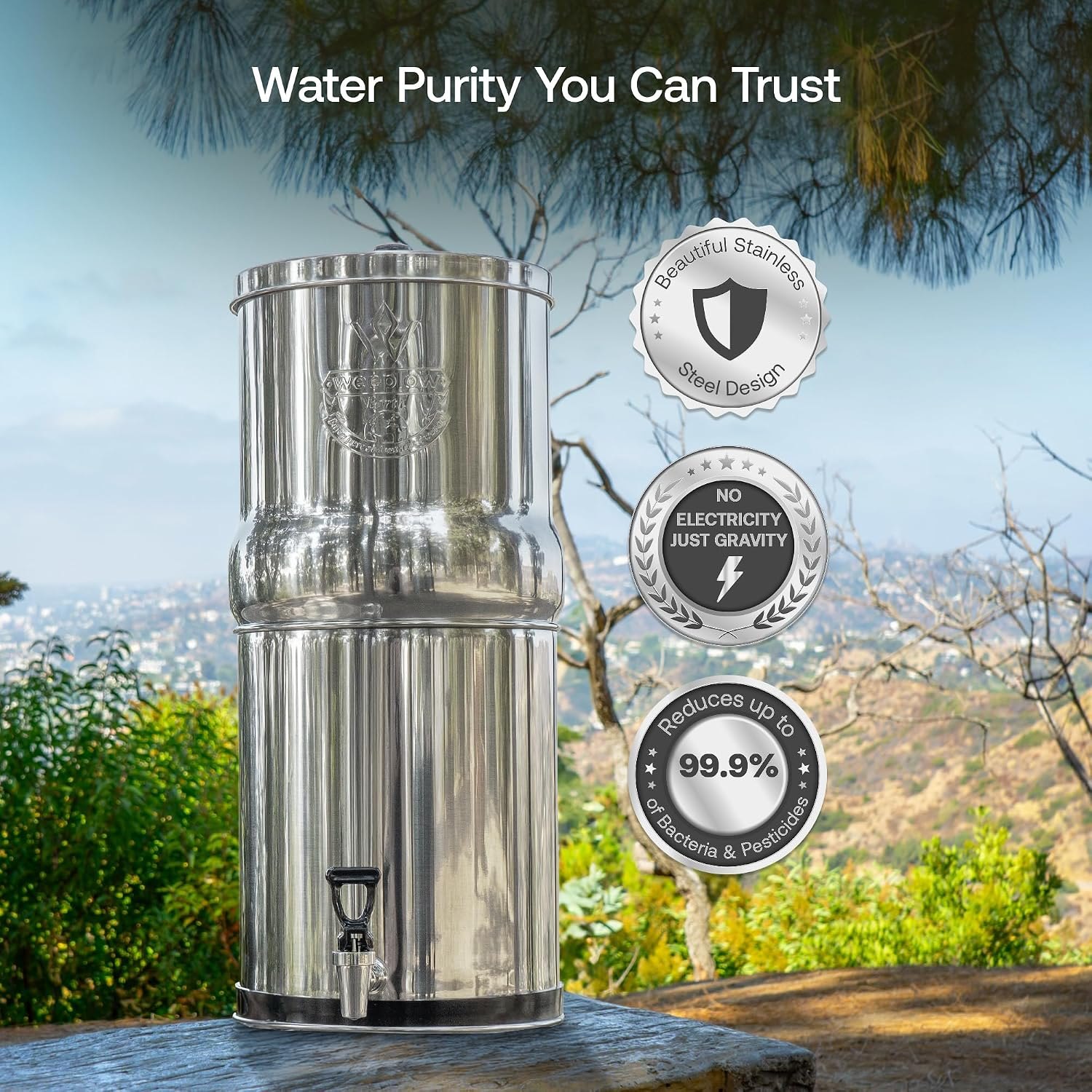
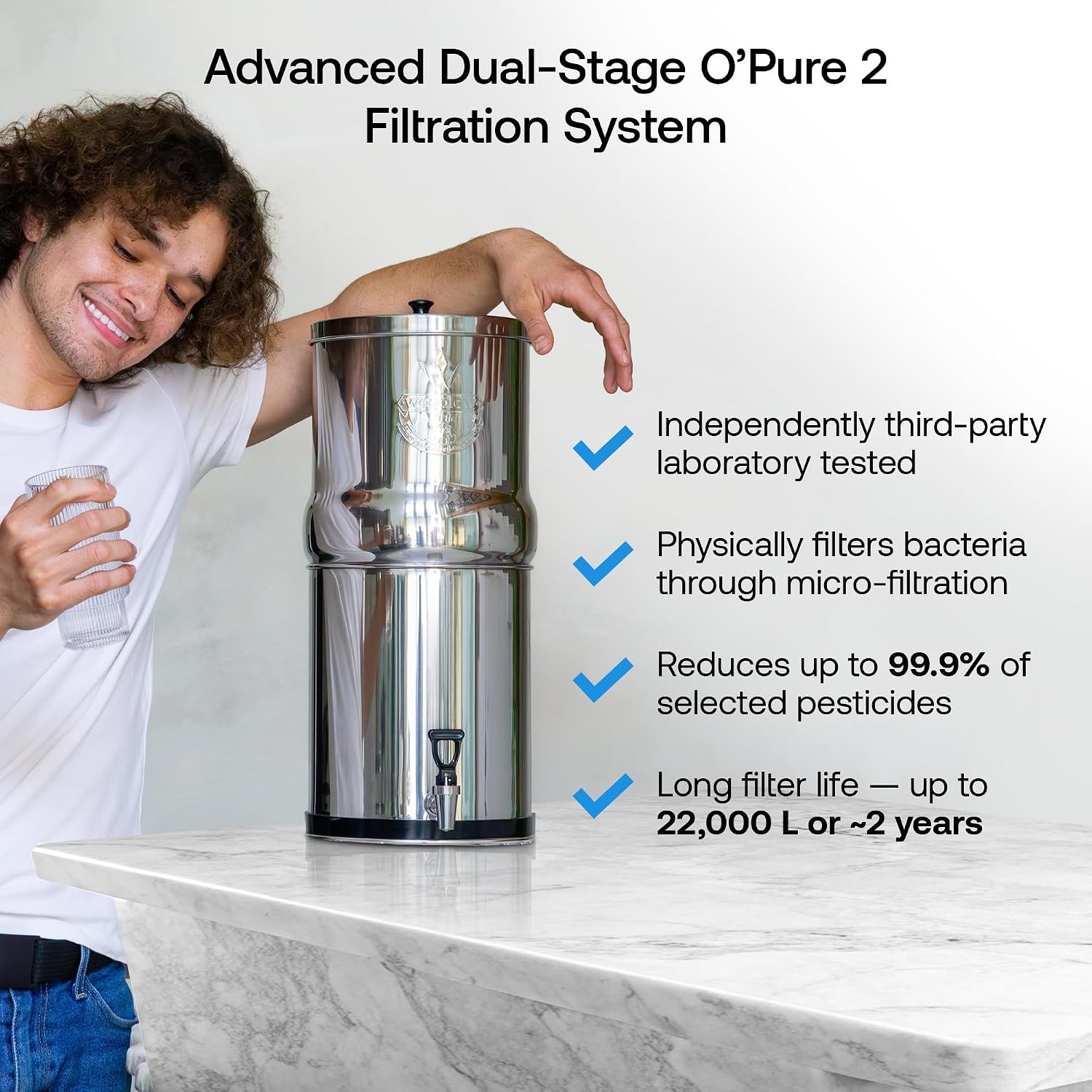
This particular system holds about 8.5 litres, which is 2.25 gallons. It is built from two stainless steel chambers with two filtration elements fitted between them. It is designed to reduce chlorine taste and odour and sediment in drinkable mains water. That is the honest scope of it, and knowing that up front saves disappointment later.
How a gravity fed water filter system actually works
There is no clever mechanism here, which is the appeal. The upper chamber holds the water you have just poured in. The filtration elements sit in the base of that chamber, poking down through into the lower one. Water sits on top of the elements and slowly works its way through the filter media under its own weight. Filtered water collects in the bottom chamber, where a small tap lets you draw it off.
No pump. No mains lead. No connection to your plumbing. That has a few practical consequences worth thinking about.
First, it keeps working in a power cut, which is why people who keep emergency supplies tend to own one. Second, it does not care where it lives. A rented flat where you cannot touch the plumbing, a caravan, a holiday cottage, an office kitchen with one sad tap. Set it on something level and it works. Third, it is slow by design. Gravity is not in a hurry. You fill it and come back later, rather than standing at it waiting.
The slowness catches people out, so it is worth building a habit around. Fill the top chamber after dinner, and there is filtered water waiting at breakfast. That one routine is the difference between a filter you use and a filter that gathers dust.
Why stainless steel over plastic
A filter lives on the worktop permanently. It gets splashed, wiped, knocked by elbows, and refilled a few times a day. Plastic copes with that for a while, then it scuffs, it discolours around the seams, and it starts to hold on to smells. Stainless steel does not do any of that.
Both chambers here are stainless steel with a polished finish. It cleans up with a cloth, it does not stain from hard water deposits in the same way, and it will not look tired after a year. The unit weighs 3.45kg empty, which gives it enough presence to stay put when you turn the tap, without being awkward to lift off the counter for a proper clean underneath.
The finish does show fingerprints, which is the trade-off with anything polished. A quick wipe with a dry cloth sorts it. If that would irritate you daily, a brushed or matte kitchen appliance might suit your temperament better, and that is a fair reason to choose differently.
Does it fit where you want to put it?
This is the part worth being fussy about before you order, because it is the single most common reason a countertop water filter ends up going back.
The assembled unit is about 22cm long, 22cm wide and 50cm high. The footprint is small, genuinely small, smaller than most kettles with their base. The height is the issue. A standard gap between worktop and the underside of a wall cupboard is often around 50 to 60cm, which leaves you very little room to lift the lid and pour water in.
So take a tape measure to your kitchen before you buy. If the gap is tight, you have options. Stand it at the end of a run where there is nothing overhead. Put it on an island or a breakfast bar. Or accept that you will pull it forward to fill it and push it back afterwards, which plenty of people do without minding.
Also think about where you will stand to fill it. Carrying a full jug across the kitchen gets old. Close to the tap is always better.
Who it suits, and who it does not
This works well for a household of two to five people who drink water, make a lot of tea, and are tired of filter jugs. It works for anyone in rented accommodation who cannot alter the plumbing. It suits caravans, static homes, holiday lets and offices. And it is a reasonable thing to keep in a cupboard for when the supply is disrupted, since it needs no power to run.
It is less suitable if you want instant water on demand. An under-sink system plumbed to its own tap will always beat gravity on speed. It is also not the answer if your kitchen has no spare worktop at all, because 22cm of permanent floor space is still 22cm.
The most important limit is this. The system is for use with drinkable mains (town) water. It is not a device for making questionable water drinkable. Do not fill it from a stream, a water butt or a well. If you take it camping, fill it from the site's potable tap, not from the river.
One more spec to check against your own supply. The maximum supported water TDS level is listed as 300 ppm. TDS is a rough measure of dissolved solids in the water. If you live somewhere with unusually high readings, look up your local figure before you commit.
Living with it, and keeping it working
Setting up is a case of rinsing the chambers, fitting the two elements per the instructions in the box, and running the first fill through. Many gravity systems ask you to discard the first batch or two. Follow whatever the supplied documentation says rather than assuming.
Day to day, it needs almost nothing. Fill the top, draw from the bottom, repeat. Try to use what you filter within a day rather than letting water sit in the lower chamber for a week. If it has been standing a while, tip it out and rinse before you refill.
Cleaning is straightforward. Hand wash both chambers in warm water with a bit of mild washing-up liquid, rinse thoroughly, and dry with a soft cloth to keep the polish even. Skip the dishwasher, skip bleach, and keep scourers well away from the steel. Clean the elements only in the way the maker describes, because filter media is not something you should improvise with.
The elements are consumable parts and they need replacing on the maker's schedule. The maker's description we hold does not give a filter life, so the instructions in the box are your reference point. Write the fitting date on a bit of tape and stick it to the base. It takes five seconds and it stops the slow drift into using elements that are well past their time.
One useful detail if you have been comparing systems: these filters contain no silver. Some gravity elements use silver as part of their construction, and some buyers specifically want to avoid it. If that was on your checklist, it is ticked here.
The short version
You are getting an 8.5 litre stainless steel gravity filter, two chambers, two elements, 22cm square on the counter and 50cm tall, weighing 3.45kg empty. No power, no plumbing. It is designed to reduce chlorine taste and odour and sediment in drinkable mains water, and it supports supplies up to 300 ppm TDS.
Measure your worktop height first. Get into a once-a-day refilling habit. Change the elements when the maker says to. Do those three things and it will quietly do its job for years.