


The complete guide
The Practical Buyer's Guide to Inline Shower Filters
Why people start looking for a shower filter
It usually begins with a smell. You step into a warm bathroom, the water hits the tiles, and there is a faint swimming-pool note in the steam. Mains water in the United Kingdom is treated before it reaches the house, and that treatment is why the supply is drinkable. The side effect is that chlorine can be more noticeable in a hot, enclosed room than it ever is from a cold tap.
The second thing people notice is grit. Older pipework, a recent main repair, or work on the street can shake loose rust flakes and sediment that end up in the shower head. You see it as speckling in the tray, or as a spray pattern that has gone slightly wonky because one nozzle is partly blocked.
An inline shower water filter is a response to both of those things. Instead of treating every drop that enters the house, it sits at the one place where you care most, right at the end of the line before the water reaches you.
How an inline shower filter actually works
The design here is deliberately simple. Water leaves your flexible hose, enters a chrome housing, passes through filtration media, and exits into the shower head. There is nothing electrical, nothing to set, and nothing to programme.
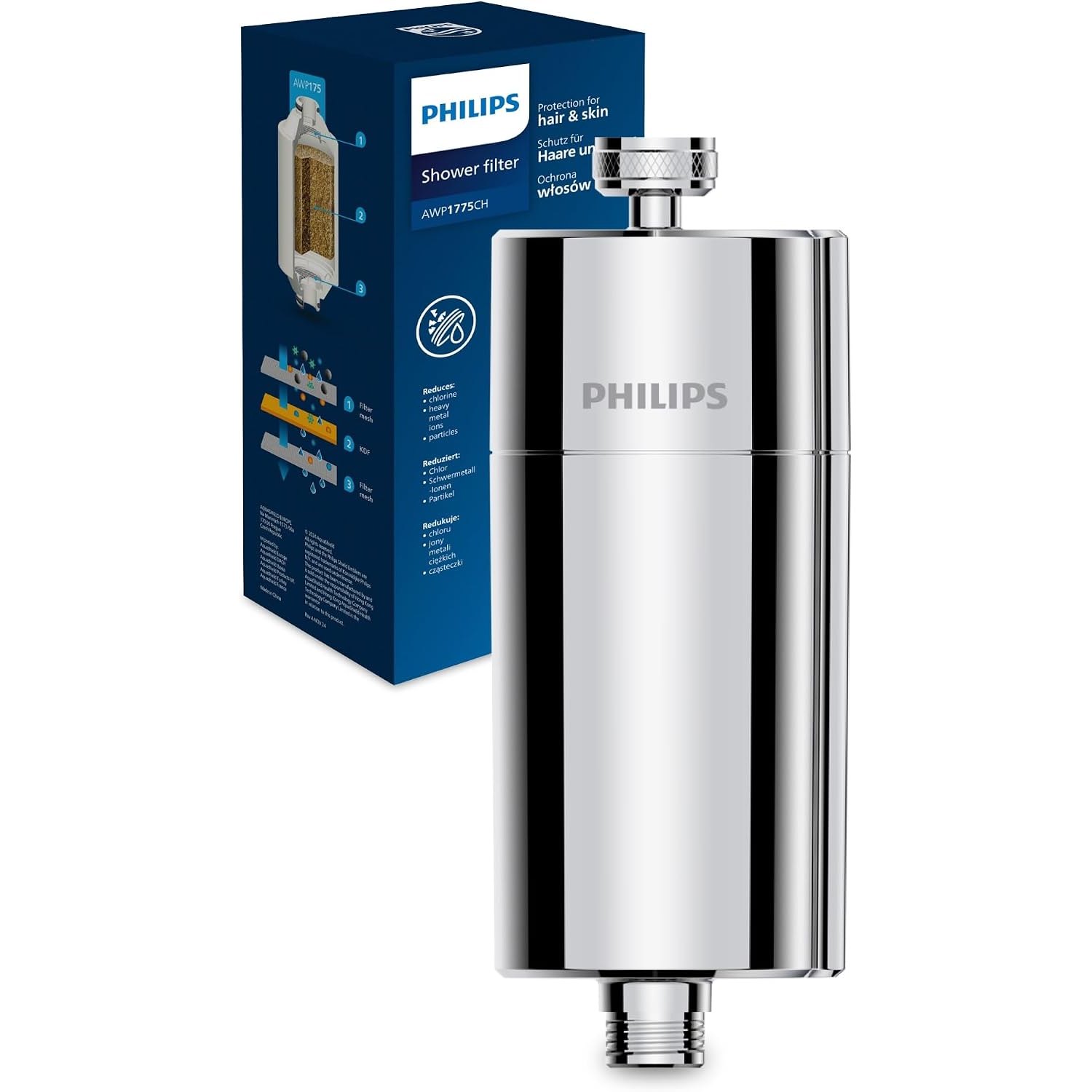
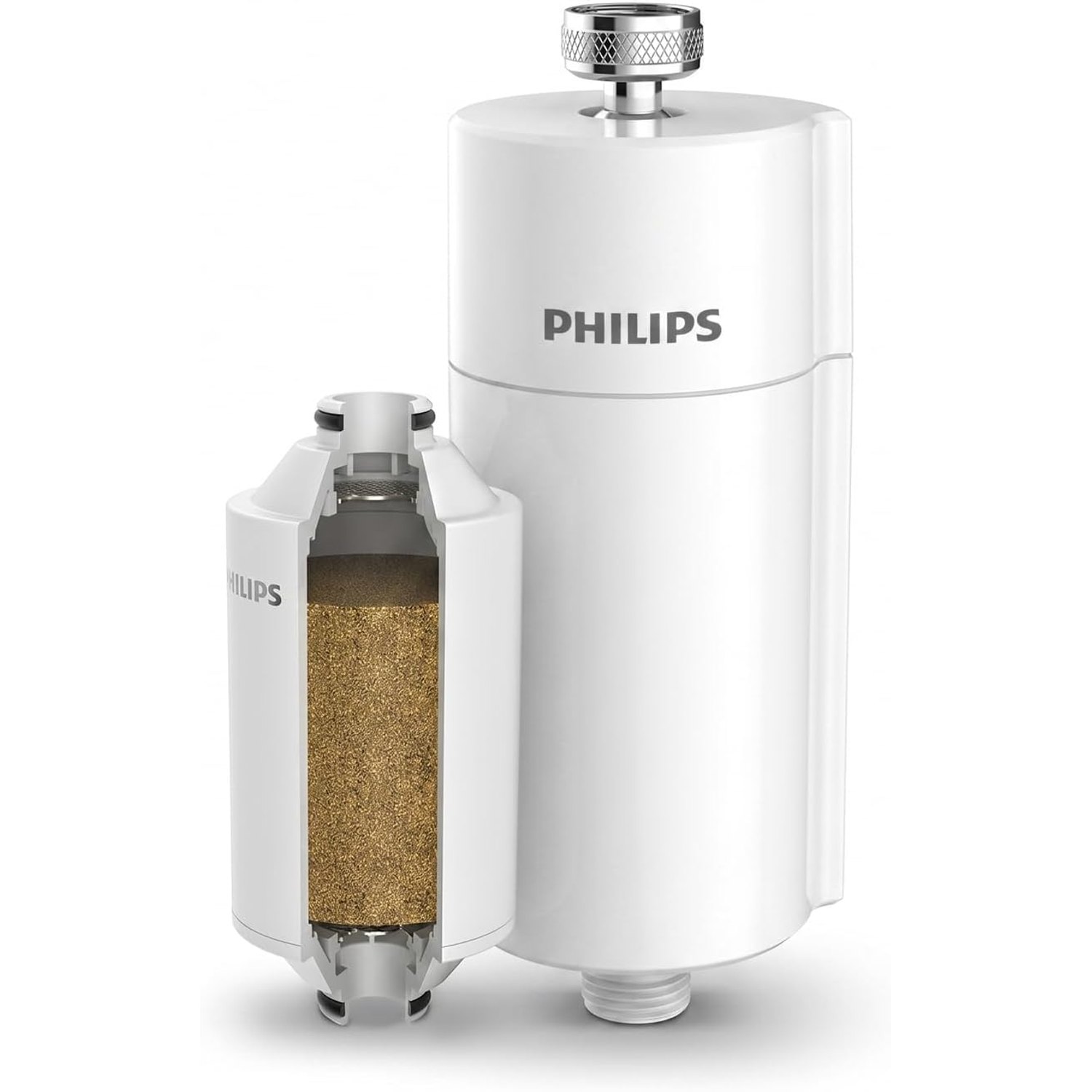
Inside, the arrangement runs in three stages. A double mesh handles the coarse work first, catching larger particles such as rust and sediment before they can reach anything finer. Behind the mesh sits KDF media, a copper-zinc alloy that has been used in shower filters for a long time. In this product, KDF is the part designed to reduce chlorine taste and odour.
Order matters in filtration. Putting the mesh first protects the media behind it from being clogged by debris that a simple screen can catch. It is the same logic as a doormat before a carpet.
Worth being clear about what this is not. It is not a softener, and it does not change the hardness of your water. It is not a purifier, and it makes no difference to whether your water is safe to drink, because it is designed for use with drinkable mains supply in the first place. If your tap water is already fine to drink, this filter is about taste, odour and grit at the shower head, nothing more.
Who this suits
Renters get the clearest benefit. Nothing is cut, drilled or glued. You screw the filter onto the hose, screw the head back on, and when you move out you reverse it in two minutes. Most tenancy agreements have no issue with that, though it never hurts to check.
People in older housing stock often notice the sediment side more than the chlorine side. If your shower head needs descaling or unblocking more often than it should, a mesh stage in front of it is doing useful work.
Anyone kitting out a new bathroom may also want it simply because it is tidy. A chrome housing between a chrome hose and a chrome head does not shout for attention.
Who it suits less well: anyone with a ceiling-mounted rainfall head plumbed in directly, with no hose and no accessible thread. There is physically nowhere to put an inline unit in that setup. The same goes for showers on a private well or borehole supply, which this product is not intended for.
How to choose, and what to check before you buy
Start with the joint. Look at where your shower hose meets your shower head. If there is a threaded connection you can unscrew by hand, you have a home for an inline filter. If the head is fixed to the wall or ceiling with no visible joint, you do not.
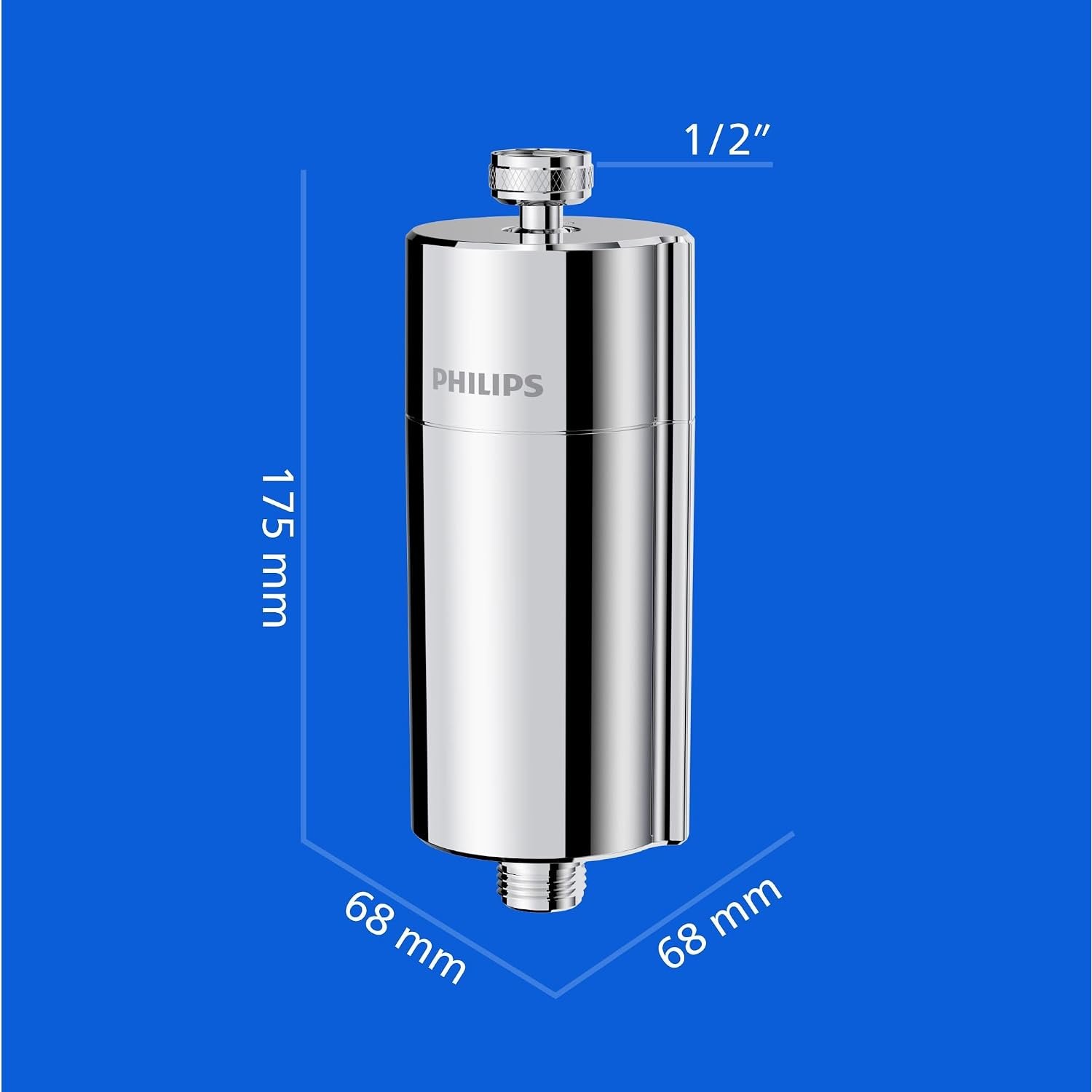
Then think about space. This unit stands about 17.5 cm tall and about 6.8 cm across. That length goes in between the hose and the head, which effectively drops the head by the same amount when it is hanging in its bracket. In a generous cubicle nobody notices. In a shower over a bath with a low rail, slide the bracket up a notch and you are fine. In a very tight space, hold a ruler up before you order.
Weight is the next consideration, and 465 g is modest. It is light enough that a flexible hose will hold it without sagging dramatically. If your hose is old and already tired, that is a separate problem and a new hose costs very little.
Finally, think about the cartridge. The unit arrives with a filter cartridge inside, and that cartridge is a consumable. Any shower filter cartridge has a working life, and the maker will specify when to change it. Factor that ongoing swap into your decision, because a filter nobody ever refills is just a chrome spacer.
Thread size is not listed by the maker, so compare the fitting with your existing hose and head rather than assuming. Most domestic UK shower hoses share a common standard, but checking takes a moment and saves a return.
Fitting it without drama
Turn the shower off properly at the valve. Hang a towel in the tray to catch drips and stop anything small disappearing down the waste.
Unscrew the shower head from the hose by hand. Have a look at the washer inside the hose nut. If it is cracked or squashed flat, replace it while you have everything apart, since a worn washer is the usual cause of a weeping joint.
Screw the filter onto the hose with the inlet facing the hose, following any arrow or marking on the body. Then screw your shower head onto the other end of the filter. Hand-tight is normally enough. Overtightening a chrome fitting is a good way to crack it.
Turn the water back on slowly and watch both joints for thirty seconds. A small weep almost always comes down to a washer that has not seated, or threads that needed a few wraps of PTFE tape. Both are quick fixes.
Looking after it
Day to day, there is almost nothing to do. Wipe the chrome with a soft damp cloth and dry it off, which keeps water spots from building up. Keep bleach, strong limescale removers and abrasive pads away from the finish, because chrome is tougher than it looks but not invincible.
The real maintenance is the cartridge. Replace it on the maker's schedule. Filter media does not last forever, and once it is spent the unit stops doing the job you bought it for. A reminder in your phone on the day you fit it is the easiest system anyone has come up with.
Watch your flow rate as a secondary signal. If the spray weakens noticeably over weeks, check the mesh and the cartridge before you start blaming the boiler.
If you go away for a long stretch, or the shower sits unused for months, it is sensible to run the water for a minute or two before you step in, just as you would with any plumbing that has been standing.
The short version
An inline shower filter is one of the few bathroom upgrades you can fit in less time than it takes to make tea. This one combines a double mesh with KDF media in a chrome housing about 17.5 cm tall, weighing about 465 g, with a cartridge included.
It is designed to reduce chlorine taste and odour and to catch sediment from drinkable mains water. It is not a softener and not a purifier, and it needs its cartridge swapped on schedule to keep working as intended.
If your shower has a hose and a threaded head, you have room for it. If your main complaint is the smell of the steam or grit in the tray, it is a sensible, reversible thing to try.